Cooper Peptides Aren’t New, But They’re Finally Getting Their Due

Copper peptides have moved from niche ingredient to skin-care staple, showing up in everything from drugstore face serums to luxury creams. Formulas built around the ingredient are typically marketed for plumping, firming and overall anti-aging benefits—and dermatologists say the hype is largely earned.
But how much do you actually know about them? Ahead, we asked experts to break down how copper peptides work on skin, where the ingredient comes from and which formulations are worth adding to your routine.
Featured Experts
- Joel Schlessinger, MD is a board-certified dermatologist in Omaha, NE
- Jody Levine, MD is a board-certified dermatologist in New York
- Janine Hopkins, MD is a board-certified dermatologist in Southlake, TX
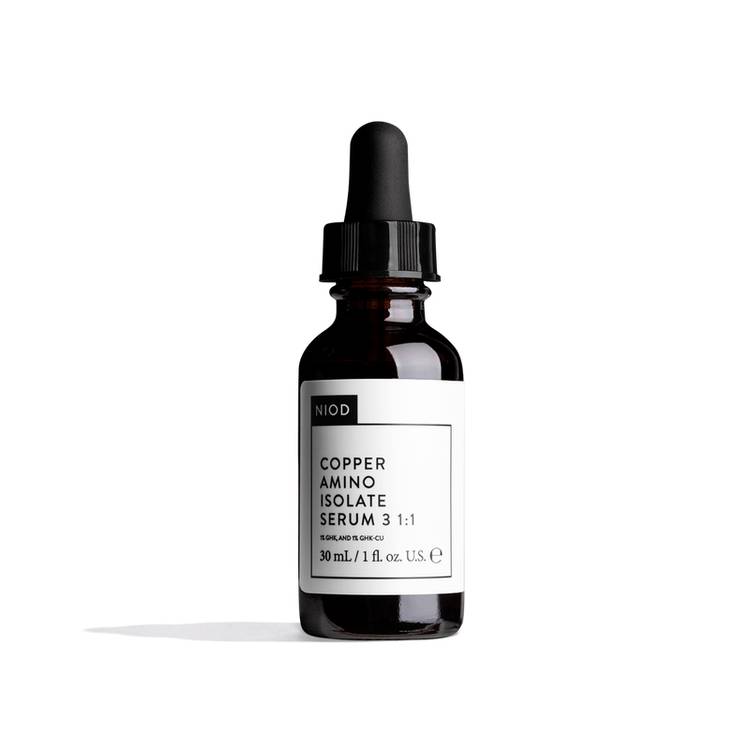
- Joe Basham is the senior scientific communications manager at NIOD
- McKenzie Rose is the director of global education at Biossance
What Are Copper Peptides?
Copper peptides are small chains of amino acids bound to copper ions, a pairing that helps deliver the mineral directly into skin cells.
“Copper is an essential element for keeping nearly all tissues in the human body healthy,” says Omaha, NE dermatologist Joel Schlessinger, MD. “Within the skin, copper plays a part in the synthesis and stabilization of extracellular matrix skin proteins (i.e., collagen and elastin), as well as angiogenesis, which is the formation of new blood vessels.”
New York dermatologist Jody Levine, MD adds that trace amounts of copper peptides are found naturally in blood plasma, saliva and urine. These naturally occurring signaling molecules help regulate tissue repair, collagen remodeling, wound healing and skin regeneration, explains Southlake, TX dermatologist Janine Hopkins, MD. But that supply isn’t infinite: Joe Basham, senior scientific communications manager at NIOD, notes that “as we age, levels of these molecules decline, with estimates showing a potential 60 percent reduction by age 60.”
GHK-Cu: The Original Copper Peptide
GHK-Cu is the most popular and heavily researched copper peptide in skin care. “Unlike many cosmetic peptides that target a single pathway, GHK-Cu influences multiple biologic processes involved in skin repair,” says Dr. Hopkins. “First identified by Dr. Loren Pickart in 1973, it has more than 50 years of published scientific research—one of the longest histories of any peptide used in dermatology.” The research suggests GHK-Cu “supports collagen production, improves skin elasticity, reduces chronic inflammation and strengthens the skin barrier, ultimately improving overall skin quality and resilience.”
Take glycation protection, for instance. Glycation happens when excess sugar molecules bind to collagen and other proteins in the skin, making them stiffer and more prone to breaking down over time—a process that can speed up visible aging. Basham explains that GHK-Cu works “using multiple approaches, such as protecting against glycation-related damage to structural components, while promoting levels of those molecules such as collagen”—guarding the collagen it helps build in the first place.
Copper Peptide’s Skin-Care Benefits
Copper Peptides Help With Anti-Aging
“Topical use of copper peptides helps support the skin’s natural repair processes, promotes innate levels of collagen and helps protect against factors that can contribute to the aging process,” says Basham. “This creates a foundation of overall visible skin health and supports skin longevity regardless of where you are on your aging journey.” With consistent use, Basham says this tends to show up as smoother texture, a more even tone, and firmer-feeling skin.
“Every skin type and every age (20s and up) can benefit from using copper peptides—think of them like a healthy gym session for your skin, keeping the elastin and collagen fibers of your skin strong and youthful,” says McKenzie Rose, director of global education at Biossance. “Your skin will look visibly firmer and plumper—think bouncy skin!” Part of that plumping effect comes from hyaluronic acid: copper peptides help stimulate its production in the skin, says Dr. Schlessinger.
Copper Peptides Fight Free Radical Damage
Dr. Schlessinger notes copper peptides are also a strong antioxidant, “good at neutralizing the oxidizing free radicals produced by daily environmental exposure to things like pollution and the sun”—one more layer of defense against accelerated aging.
Copper Peptides Help Heal Wounds and Calm Discoloration
Dr. Schlessinger says that for decades, copper peptides’ primary use was to aid the skin in wound healing. “Studies show that copper peptides are beneficial to skin’s fibroblasts, which in turn produce the essential growth factors needed for optimal skin repair,” he explains. “Copper peptides may be beneficial in supporting the healing of sensitized skin post-in-office treatments like microdermabrasion, chemical peels and laser treatments.”
Dr. Levine notes copper peptides also have anti-inflammatory properties that can help address scarring, pigmentation and redness related to inflammation—and, per Dr. Schlessinger, may help break down damaged collagen, which can reduce the look of sunspots and acne scars.
How to Use Copper Peptides
The interviewed experts agreed that copper peptides are very safe and rarely result in side effects. Still, Basham notes that as with any active ingredient, it’s worth doing a patch test first, especially if you have known sensitivities.
Layering is where most people run into trouble. “It’s also worth being thoughtful about layering. Pairing copper peptides with strong acids, vitamin C or retinoids in the same application can work against the peptide, so many people find it easier to separate those steps by time of day or alternate nights,” says Basham. Part of the issue is chemical: “Copper can oxidize the ascorbic acid, rendering it ineffective,” explains Dr. Schlessinger.
While topical copper peptides are generally well tolerated, Dr. Hopkins notes that systemic forms—including oral, sublingual or injectable formulations—should be used under physician supervision or within clinical research.
Best Copper Peptide Products to Try
2 / 5
3 / 5
4 / 5
5 / 5