
When Retinol Is No Longer Enough, What Comes Next for Your Skin?

Many of us have experienced that frustrating moment in our skin-care journey when the products that once made our skin look firmer, healthier and glowing seem to stop pulling their weight. Before you assume your routine has failed or rush to upgrade to stronger formulas, dermatologists say there’s a biological reason progress can feel like it has stalled. As skin ages, everything from cell turnover to barrier function evolves, changing the way it responds to even the most trusted ingredients. The result? A complexion that may need a different strategy—not just a more aggressive one.
Featured Experts
- Amy Taub, MD, a board-certified dermatologist based in Lincolnshire, IL
- Gregory Keller, MD, a double board-certified facial plastic surgeon based in Beverly Hills, CA
- Jessica Weiser, MD, a board-certified dermatologist based in New York
- Natalie Curcio, MD, a board-certified dermatologist based in Nashville, TN
Why Your Skin-Care Routine No Longer Works the Way It Used To
At Lincolnshire, IL dermatologist Amy Taub, MD’s practice, patients frequently express this frustration. “Patients will often say, ‘I’m using the same products, but my skin just doesn’t look as fresh.’ That is very common, especially as patients move into their 40s, 50s, 60s and beyond.”
Nashville, TN dermatologist Natalie Curcio, MD, agrees, saying this is one of the most common conversations she has with her patients. “They come in frustrated—they’ve been consistent, they’ve invested in good products, and at some point, the results just seem to plateau,” she explains. “They often tell me a similar story: ‘I feel like I’m doing everything right, but my skin just doesn’t respond in the same way anymore.’”
In fact, what these patients are experiencing is real, and this phenomenon has a biological explanation. “Biologically, several things are happening at once: Collagen production decreases, the epidermis—top layer of skin—becomes thinner, the barrier is impaired, meaning more dryness and inflammation, and the skin’s repair mechanisms are less efficient,” Dr. Taub explains. “There is also accumulated environmental damage from ultraviolet light, pollution, inflammation and oxidative stress. So, the issue is not usually that the product has ‘stopped working.’ It is that the skin’s ability to respond has been reduced.”
What to Do (and Not Do) When This Happens
When results plateau, the instinct is often to do more: a stronger retinoid, more acids, more exfoliation, and sometimes all at once. “That often backfires,” says Dr. Taub. “The skin barrier becomes impaired, causing redness, burning, breakouts, flaking, and paradoxically, more dullness. Inflamed skin does not age better; it looks older, more uneven and less healthy.”
There is a point where being more aggressive is not more effective, and it just becomes more stressful to the skin. Dr. Curcio points out that a stressed skin barrier is also actually less receptive to the actives you’re applying. “You end up working harder for diminishing returns,” she says. “That doesn’t mean active ingredients are the problem. It means there’s a point where supporting the skin becomes more important than constantly pushing it harder.”
Dr. Weiser adds that rather than adding products to your routine to compensate for a lack of efficacy, “it is important to learn to substitute them. Each active has potential benefits, but also theoretical risks. When you’re not realizing the benefits of an active ingredient, the risks are outweighing the benefits and it is time to remove that active from your routine and try an alternate option in its place.” What worked beautifully for you at 35 may not be the right strategy at 55 or 65.
Is Retinol the Answer?
Retinoids remain one of the most important and best-studied ingredients we have in dermatology, says Dr. Taub. “They help with cell turnover, pigment irregularity, acne, fine lines and collagen support, but they are not magic, and they are not the complete answer to aging skin,” she explains. “Retinoids’ limitation is that they primarily work by increasing turnover and stimulating certain repair pathways. This can impair the barrier at a time when it is already compromised and lead to more dryness and irritation, when what the skin really needs is better barrier support, improved hydration, reduction of inflammation, and signals that help the skin repair in a more balanced way. Retinoids are one tool, but they are no longer the only one. Remember, the research for retinoids were done over 40 years ago!”
Dr. Weiser adds that some people also develop chronic sensitivity to retinol as they age, which presents as redness, dryness, irritation and reactivity. “As estrogen levels wane, skin can naturally become drier, therefore some patients’ tolerance to retinol can diminish and can exacerbate barrier dysfunction.”
After years of using retinoids, Dr. Curcio adds that many patients find that they have reached a ceiling on visible improvement. “There is also a misconception I see constantly: that stronger retinol is better for the skin. Patients keep increasing potency hoping to recreate results they saw years earlier, but skin biology evolves over time, and the strategy needs to evolve with it.”
New Approaches to Stimulate Skin Instead of Retinol
“This is genuinely one of the more exciting areas in dermatology right now,” says Dr. Curcio. “For decades, the dominant model was stimulation—retinoids, acids, controlled irritation—essentially instructing the skin to turn over faster. What’s emerging now is a more nuanced understanding of the signaling molecules that coordinate renewal at a deeper level.”
“Skin regeneration—a big buzzword right now—is currently at the forefront of skin care because we have stopped emphasizing changing the skin—removing old skin cells—and started emphasizing how to reverse the signs of aging to improve skin quality,” Dr. Weiser says. “Turnover implies the removal of old cells with the anticipation that they will be replaced with new ones, but in fact, many turnover products cause irritation and dryness instead of cell production. Regeneration can include both collagen stimulation through fibroblast activation, but also increase skin cell production by switching on stem cells that naturally exist in the pores or hair follicles within the skin.”
Newer approaches are looking at ways to support the skin’s own repair systems, adds Dr. Taub. “That includes peptides, growth factors, extracellular vesicles, defensins and other regenerative signals. These approaches are not all the same, and they do not all have the same level of evidence, but the direction of the field is clear. We are trying to move from irritation-based rejuvenation to biologically intelligent rejuvenation.”
Defensins Have a Big Role to Play: What Are They?
“In skin care, defensins are interesting because they may help support the skin’s natural renewal process by signaling certain dormant or less active regenerative pathways,” Dr. Taub explains. “I think of them as part of a well-rounded routine, which also includes antioxidants, growth factors, sunscreen and possibly mild exfoliation. In many cases, they can promote epidermal turnover just as well as retinoids, but without the dryness and inflammation. They may be especially useful for patients who want renewal but cannot tolerate constant irritation from stronger actives.”
Key opinion leaders in aesthetic dermatology have called defensins one of the biggest breakthroughs in cosmetic skin care since the discovery of retinoids. What makes them scientifically compelling, Dr. Curcio says, is what they reveal about how the skin renews itself. “This represents one of the more interesting shifts in how we think about skin renewal in recent years.” DefenAge has built its entire line around Age-Repair Defensins, applying the same skin-renewal science across treatments for the face, neck, eyelids and beyond.
How Defensins Help Transform Aging Skin
“There’s something I find myself explaining to patients that tends to really land,” Dr. Curcio continues. “When skin heals from a wound, the new skin that forms looks remarkably younger and fresher than the surrounding tissue. That is not an accident. The body has activated a very specific renewal cascade, and defensins are among the key signals that initiate it. The science behind topical defensins is essentially asking: Can we engage that same biology deliberately for skin revitalization, without requiring injury? Defensins offer a meaningfully different way to support skin renewal, particularly for patients who have reached the limits of what more aggressive strategies can deliver. This pathway is exclusive to DefenAge.”
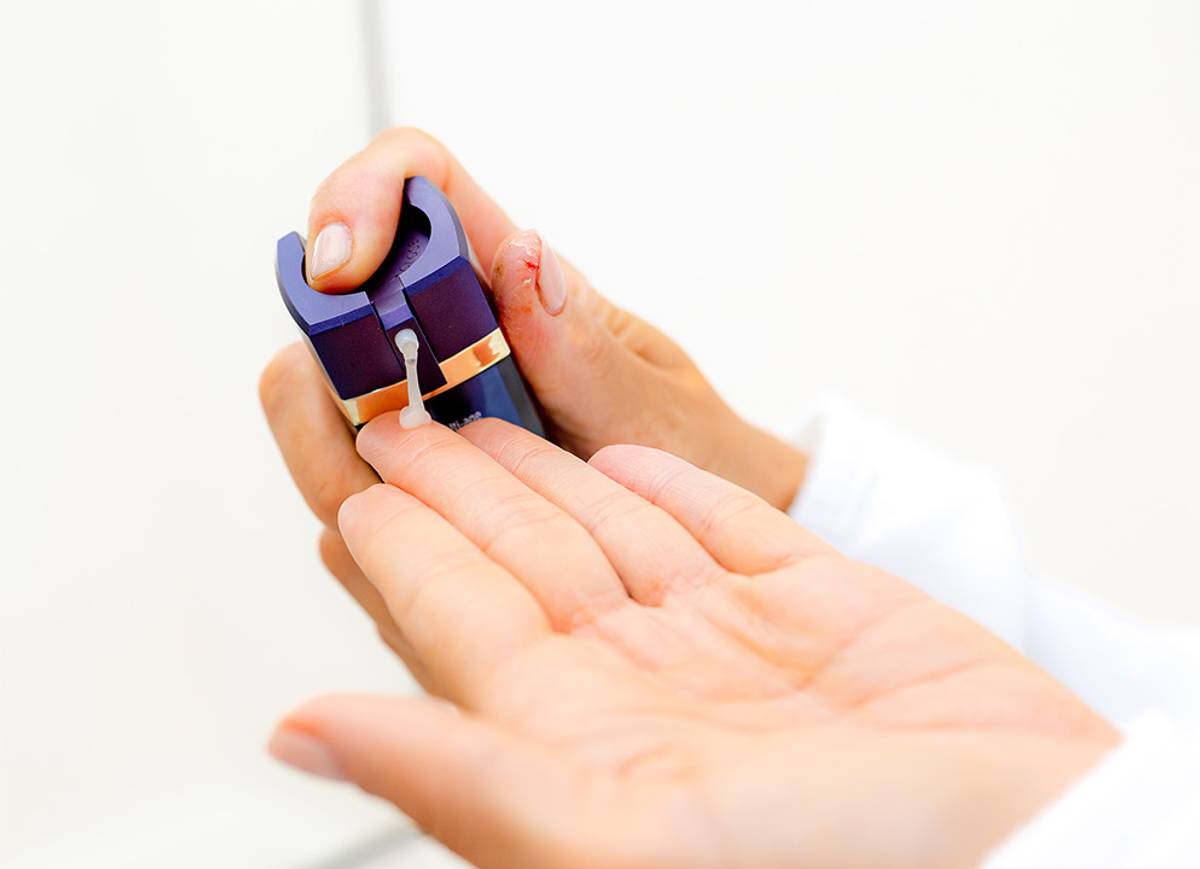
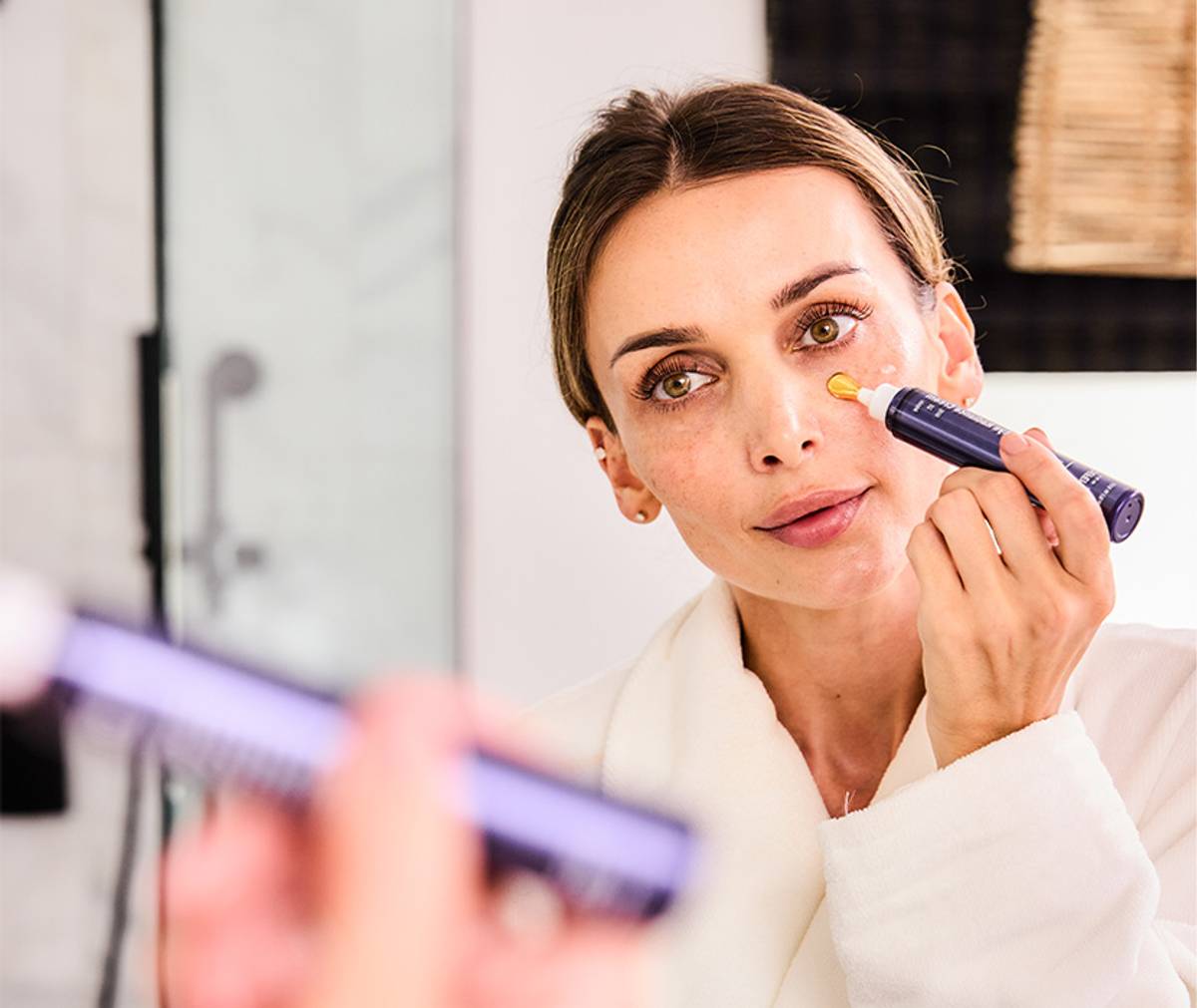
DefenAge products cause a “Global Visual Improvement” in the skin, which includes improvement in fine lines and wrinkles, pigment, tone/texture, skin laxity and pore size. “Most people start noticing a difference in four to eight weeks, with their skin looking smoother and more radiant,” says Dr. Curcio. “Over time, it appears that the products have ‘turned back the clock’, as the skin looks and feels younger. I love that this product line is ‘one-stop shopping’ for all of your anti-aging needs! In all cases, the creams, such as the 24/7 Barrier Balance Cream,are applied first—after cleansing the skin—followed by the 8-in-1 BioSerum. Of course, all skin-care regimens should be followed by broad-spectrum, physical sunscreen with an SPF 30+ or higher during the day.”
Beverly Hills, CA facial plastic surgeon Gregory Keller, MD says DefenAge is one of the product lines he recommends to patients who want to maintain or improve their skin, but aren’t ready for in-office procedures. “For patients in their 20s and 30s, frown lines, acne scars and/or a dull complexion are often concerns, but patients express not wanting to look ‘frozen’ or ‘too shiny’ from neurotoxins, fillers, lasers or microneedling,” he adds. “In these young patients, often a shift to DefenAge’s BioSerum will overcome some of these problems.” For those in their 40s and beyond, DefenAge can be used to complement noninvasive in-office treatments, while also helping patients stave off surgery.
Can You Use Defensins and Retinol Together?
Yes. “Retinoids work largely by increasing epidermal turnover and influencing collagen-related pathways; defensins signal the skin’s own regenerative cells—the ones that lay dormant in pores and are much fresher—and wound-repair pathways rather than simply pushing the surface cells to turn over faster,” says Dr. Taub. “For many patients, the best approach is a thoughtful combination: Protect the skin, support the barrier, use retinoids when tolerated, but stop if too irritating and drying, and use skin care containing defensins for turnover, which is much gentler but also extremely effective.”
“Retinol is not faster, it’s different. I don’t see it as an either/or conversation,” adds Dr. Curcio. “Many of my patients use both. But, for those whose skin has become less responsive to more aggressive renewal strategies, or those who can no longer tolerate strong actives, defensins offer a path that works with the skin’s biology rather than around it. Patients and their skin evolve over time, and it’s worth having different approaches that evolve with them.”